STORY BY SHRUTI SINGH

Where the Land Ends, Another India Begins

Far from the spotlight, India’s surfing culture is quietly reshaping the country’s relationship with the ocean, making surfing in India one of the fastestgrowing outdoor communities today.

India’s Surfing Culture: A Relationship Rediscovered

For a country with over 7,500 kilometres of coastline, India’s relationship with the sea has always been strangely distant. The ocean has long been a site of livelihood, pilgrimage, and commerce, its waters navigated by fishermen, traders, and sailors. But rarely imagined as a space for leisure or self-discovery.

Beaches have often been destinations for visits and vacations. Water, despite surrounding us, has remained something to fear, worship or work upon, but seldom something to play with. Yet, quietly and almost invisibly, that relationship has begun to change.

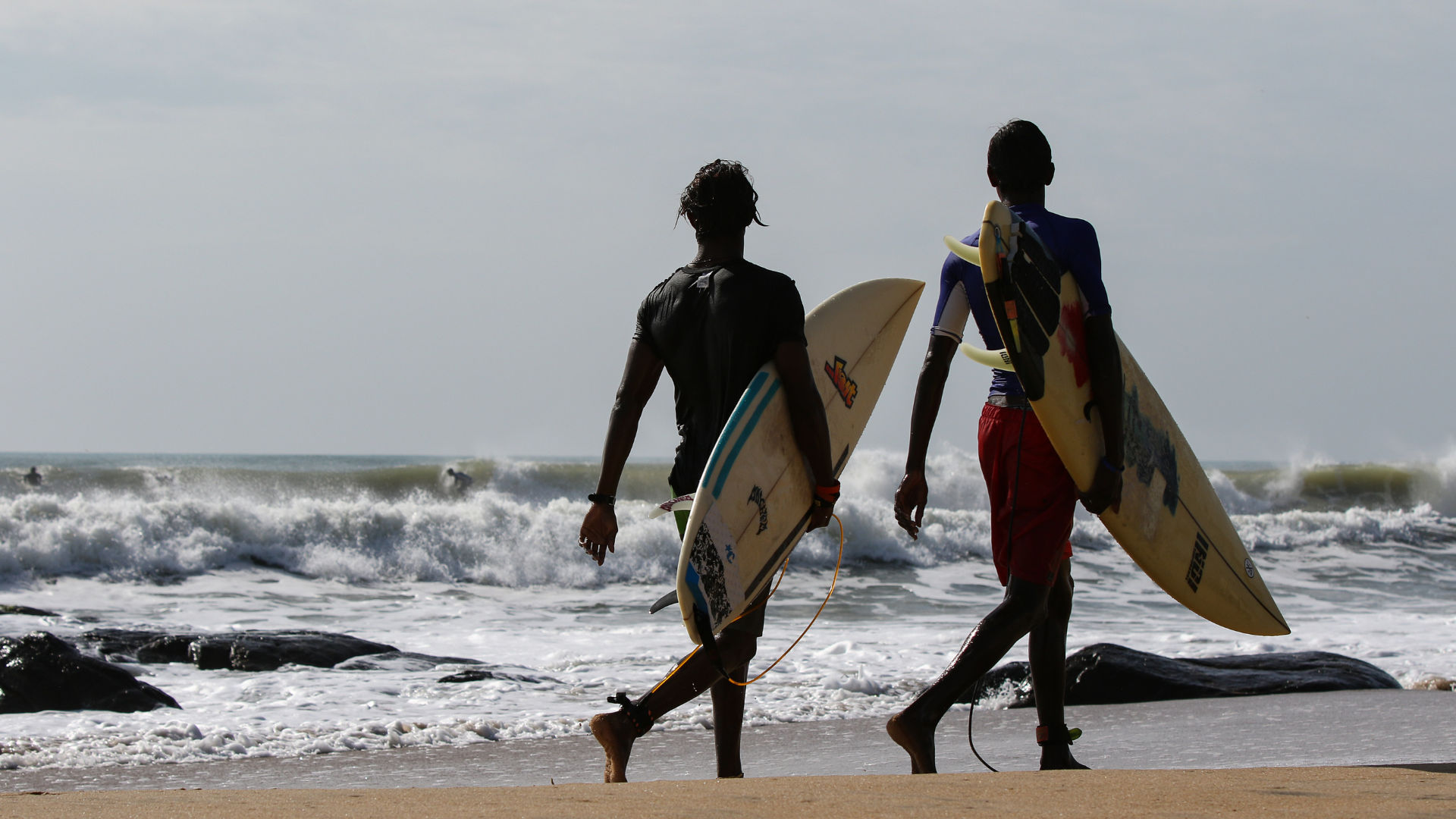
Far from the spectacle of cricket stadiums and Himalayan treks, a surfing culture has been taking shape along India’s shores. From the fishing villages of Karnataka to the beaches of Chennai, Goa and Kerala, small communities are redefining what it means to belong to the ocean. Their story is about reclaiming a coastline that India has always possessed but never quite experienced.

What began as a niche pursuit is now quietly becoming one of the country’s most compelling outdoor movements, with surfing in India steadily drawing travellers, athletes, environmentalists and local coastal communities into a shared culture centred on the ocean. Today, Indian surfers can be found across different coastal regions of India, while organisations like the Surfing Federation of India continue to develop the sport and its surrounding culture. Beyond competition, surfing is also fostering stronger coastal communities, environmental awareness and a renewed relationship with the ocean.

Green textured background

From a Handful of Surfers to the Surfing Federation of India

Few people have witnessed this evolution as closely as Rammohan Paranjpe, founding member of the Surfing Federation of India.

“When we started,” he recalls, “we were just a handful of teenagers in a small town near Mangaluru. Surfing wasn’t a sport, it wasn’t recognised, and it wasn’t even something people knew existed. We were simply doing it because it was fun.”

There was no roadmap, no infrastructure, and certainly no industry waiting to welcome them. What existed instead was curiosity. A few friends surfed. They photographed it, wrote blogs, shared stories online and gradually invited outsiders to experience the waves.

What began as a hobby slowly transformed into India’s first surf club before eventually leading to the formation of the Surfing Federation of India in late 2011. Years before surfing became an Olympic sport or received official recognition in India, the community of Indian surfers had already begun laying its foundations while developing safety standards, organising events and building a culture from the ground up.

More Than Waves: The Community Behind Surfing in India

The remarkable thing about surfing in India is the way it has evolved. Unlike countries where surfing became synonymous with counterculture, rebellion or beach-party lifestyles, India’s surf scene has taken on a distinctly local identity. “In many Western countries, surfing grew as a counterculture,” Paranjpe explains. “Here, people balance it with everyday life. They continue with their jobs and their families and still embrace surfing as a lifestyle. It’s about finding balance between both.”

That balance perhaps reflects something uniquely Indian. Rather than rejecting existing identities, surfing becomes another layer of them. Students spend weekends chasing swells. Local fishermen share waves with entrepreneurs and travellers.

The culture isn’t exclusive; it’s built around coexistence.

Hospitality plays an equally important role. “Anywhere else,” Paranjpe says, “local surf communities can be very protective of their beaches. In India, people are much more welcoming. They don’t believe they own the ocean.”

That openness extends beyond the water. Indian beaches themselves refuse to resemble the polished surf postcards of Australia or California. Here, temple bells ring beside the shoreline. Cows wander across the sand. Curious onlookers cheer from the beach as surfers paddle into the waves. Fishing boats return at dawn while surfboards are waxed nearby. Rather than replacing local life, surfing quietly folds itself into it.

Perhaps that’s why reducing surfing to tourism misses its most meaningful story. Much of the conversation surrounding Indian surfing has focused on new destinations, surf schools and adventure travel. But Paranjpe believes the real story lies elsewhere. It lies in the communities that emerge around the water. “I think people often overlook the power of community,” he says. “Wherever surfers exist, beaches become safer and cleaner.”

Why Surf Communities Make Beaches Safer

It’s an observation that feels almost too simple until you consider it. Surfers are often the first to notice changing tides, dangerous currents or someone struggling in the water. Countless rescues, Paranjpe points out, have happened simply because surfers happened to be nearby. The same communities organise regular beach clean-ups, protecting coastlines because the beach is part of their everyday life.

In that sense, surfers become something more than athletes. They become custodians of a landscape. It’s a form of environmental stewardship that grows beyond policy and forms a unique sense of intimacy. That intimacy also transforms the people who enter the water.

Green textured background

What Makes India’s Surfing Culture Unique?

“On land,” Paranjpe reflects, “you’re carrying responsibilities: your job, your family, your worries. But once you’re in the ocean, the laws of the land don’t apply.” It’s an idea that resonates far beyond surfing itself. The sea, unlike society, doesn’t recognise status. CEOs and fishermen paddle through the same currents. Wealth, profession and social identity dissolve against the rhythm of waves. “The ocean treats everyone the same,” he says. “There’s no discrimination.”

In a country often divided by class, caste and economic realities, that equalising force feels quietly radical. Perhaps this explains why India’s surfing movement has grown alongside a broader cultural shift. As Paranjpe observes, previous generations were primarily occupied with survival: building careers, securing stability and creating opportunities for the future. Today’s generation, while still manoeuvring those realities, increasingly seeks experiences alongside achievement.

“We’ve shifted from surviving to thriving,” he says. “People want to explore.” Surfing is merely one expression of that larger transformation. But growth also carries its own contradictions.

How Surfing Is Growing in India

  • Greater interest in outdoor experiences
  • Expansion of surf schools across India’s coastline
  • Growing awareness through the Surfing Federation of India
  • Strong local surf communities
  • Increased focus on ocean conservation and coastal tourism

The Future of Surfing in India

As surfing enters the mainstream, Paranjpe worries that commercial success could overshadow the values that built the culture in the first place. Increased visibility can attract people who see beaches as products rather than ecosystems or communities as obstacles rather than collaborators. “We have to respect the people who’ve built this from the ground up,” he says. “We can’t bring our prejudices from the land into the water.”

It’s a reminder that culture isn’t measured by numbers alone. It survives through relationships, with place, with people, and with nature itself. If India is only beginning to discover surfing, as Paranjpe believes, then perhaps this moment is about rediscovering the coastline. It becomes more than a backdrop for holidays or a resource to exploit.

It’s a living landscape capable of shaping communities, dissolving hierarchies and teaching us new ways of belonging. Far from the spotlight, India’s surfing culture is gradually proving that the country’s next great cultural movement might not emerge from its cities but from the places where the land finally gives way to the sea.

Green textured background

Frequently Asked Questions

1. When did surfing start in India?

Surfing in India began gaining momentum in the early 2000s through small coastal communities in Karnataka and Tamil Nadu. India’s first surf clubs emerged organically before the Surfing Federation of India was established in 2011 to support the sport nationally.

2. Is surfing popular in India?

Surfing is still considered a niche sport, but it is growing rapidly. Over the last decade, surf schools, competitions and local communities have expanded across Karnataka, Goa, Kerala, Tamil Nadu and Maharashtra.

3. Where are the best surfing places in India?

Some of the most popular surfing destinations in India

  • Mulki, Karnataka
  • Kovalam, Kerala
  • Mahabalipuram, Tamil Nadu
  • Covelong, Chennai
  • Auroville & Puducherry
  • South Goa

4. What is the Surfing Federation of India?

The Surfing Federation of India (SFI) is the national governing body for surfing in India. It promotes competitive surfing, safety standards, athlete development and the growth of surfing communities across the country.

5. Why is surfing in India becoming popular?

The rise of surfing in India reflects a broader cultural shift toward outdoor experiences, wellness and sustainable travel. Beyond sport, surfing has created close-knit coastal communities that promote ocean conservation, beach clean-ups and water safety.

Sources & References

  • Surfing Federation of India – https://surfingfederationofindia.in/
  • Surfing Federation of India (Instagram) – https://www.instagram.com/sfisurfing/?hl=en
  • Kallialay Surf School – https://surfschoolindia.com/
  • International Surfing Association – https://isasurf.org/
About the author

Shruti Singh

Shruti Singh is a freelance journalist and storyteller based in Mumbai. She writes on culture, cinema and the intersections of art, identity and everyday life, with a particular interest in communities that exist beyond the mainstream.

Instagram Handle: @tishcore3